
| ||||
|
Donate
| |||||||||||||||||||||
| News from the NIEHS |
| World Health Organization |
| EPA Office of Children's Health Protection |
| Collaborative for Health and the Environment |
| American Academy of Pediatrics |
| National Children's Study |
![]() Air Pollutants | ||
|
See also:
Environmental
Tobacco Smoke |
Indoor Air
Quality |
Outdoor Air
Quality |
Radiation |
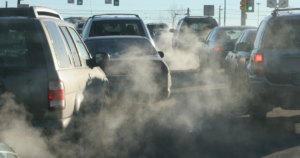
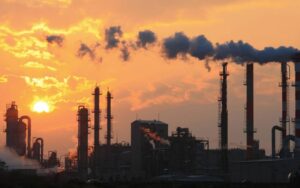
Glossary Terms Air particulates Total suspended particulate matter found in the atmosphere as solid particles or liquid droplets. Chemical composition of particulates varies widely, depending on location and time of year. Airborne particulates include windblown dust, emissions from industrial processes, smoke from the burning of wood and coal, and motor vehicle or non-road engine exhausts.(1) Air pollutant Any substance in air that could, in high enough concentration, harm man, other animals, vegetation, or material. Pollutants may include almost any natural or artificial composition of matter capable of being airborne. They may be in the form of solid particles, liquid droplets, gases, or in combination thereof. Generally, they fall into two main groups: (1) those emitted directly from identifiable sources and (2) those produced in the air by interaction between two or more primary pollutants, or by reaction with normal atmospheric constituents, with or without photoactivation.(1) Air pollutants, hazardous Air pollutants which are not covered by ambient air quality standards but which, as defined in the Clean Air Act, may reasonably be expected to cause or contribute to irreversible illness or death. Such pollutants include asbestos, beryllium, mercury, benzene, coke-oven emissions, radionuclides, and vinyl chloride.(1) Air quality standards The level of pollutants prescribed by regulations that may not be exceeded during a given time in a defined area.(1) Air toxics Any air pollutant for which a national ambient air quality standard (NAAQS) does not exist (i.e., excluding ozone, carbon monoxide, PM-10, sulfur dioxide, nitrogen oxide) that may reasonably be anticipated to cause cancer, developmental effects, reproductive dysfunctions, neurological disorders, heritable gene mutations, or other serious or irreversible chronic or acute health effects in humans.(1) Arsenic A metal widely distributed in nature and found mostly in water. Industrial contamination is the primary source of airborne arsenic. Active smelters may be a source of high exposure to arsenic fumes and dust. The manufacture of pesticides and other agricultural products is the major source of occupational exposure. Arsenic has been associated with skin cancer, lung cancer, peripheral vascular disease and liver injury. Reproductive effects have been noted in animals.(3) Asbestos A mineral fiber that can pollute air or water and cause cancer or asbestosis when inhaled. EPA has banned or severely restricted its use in manufacturing and construction.(1) Carbon monoxide (CO) A colorless, odorless, poisonous gas produced by incomplete fossil fuel combustion.(1) Chlorofluorocarbons (CFCs) A family of inert, nontoxic, and easily liquified chemicals used in refrigeration, air conditioning, packaging, insulation, or as solvents and aerosol propellants. Because CFCs are not destroyed in the lower atmosphere, they drift into the upper atmosphere where their chlorine components destroy ozone.(1) Nitric Oxide (NO) A gas formed by combustion under high temperature and high pressure in an internal combustion engine; changes into nitrogen dioxide in the ambient air and contributes to photochemical smog.(1) Photochemical smog Air pollution caused by chemical reactions of various pollutants emitted from different sources.(1) Smog Air pollution associated with oxidants. (See: photochemical smog.)(1) |
Information Sources and
Organizations Looking for information on Air Pollutants? Click on the following summary databases to learn more!
|
|
| Resource Guide Table of Contents |